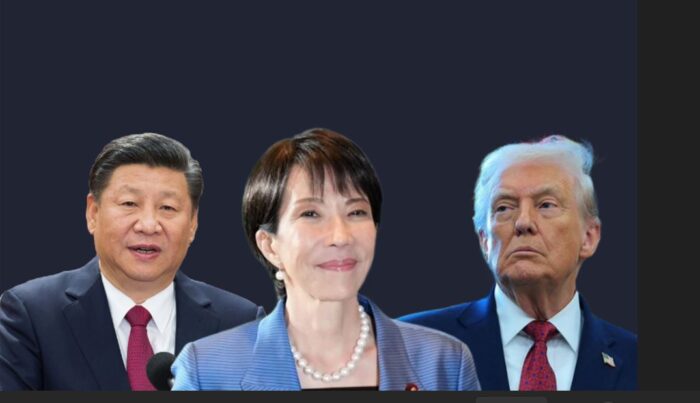
In the Chinese Zodiac, 2026 is the year of the horse, an animal considered intelligent and responsible, but also somewhat impatient. In Japan, though, this particular iteration of the horse carries a special meaning as it coincides with the element of fire in the zodiac – and thereby hangs a tale.
Several centuries ago, a lovelorn young lady was executed for spreading fires in Edo (today’s Tokyo), and the belief grew that women born in the year of the fire horse would drive their husbands to an early grave. Strangely, the unfortunate girl was not actually born in that year but the entertainment industry of the era liked it that way.
The myth was still extant in 1966, the most recent fire horse year, as was shown by the 25% decline in births that calendar year. In today’s Japan, believers are likely to be much thinner on the ground but some nervous souls may prefer to be safer than sorry.
Some other superstitions are fading fast too. That soft power is enough to protect Japan’s interests; that green power will become the major part of Japan’s energy mix; that the United States will always be a reliable ally; that warfare between advanced countries could never happen.
Last year’s scenarios were, as usual, a mixed bag. The prediction that Sanae Takaichi would take over as Japanese Prime Minister turned out to be correct, likewise the vibe change about nuclear power, which Takaichi strongly favours. On the other hand, though, there were no huge takeovers and the Seven &i deal fell apart without a formal bid being made. Still, US private equity firms have enormous capital to deploy and would be uncharacteristic if they spurned the opportunity.
Expectations that the Trump administration would want to see the Yen (and the Korean Won) much stronger against the dollar have also yet to come to pass. America’s mercurial President could change his tune any time, especially as the tariff concept seems unpopular with the public – and a more competitive currency would do the job a lot painlessly. The betting is still that over time the Yen will move towards its fundamental value. According to both the IMF and the OECD, the Purchasing Power Parity for yen / dollar is in the 90s, a long way from today’s market price of 156.
SCENARIO ONE – Takaichi becomes a long-lasting prime minister
Long-lasting prime ministers have been thin on the ground in Japan over the past 50 years. There have been only three of consequence: Yasuhiro Nakasone, Junichiro Koizumi, and Shinzo Abe. Each of them had a clear agenda that fitted the times and resonated with the public. Not coincidentally, they presided over bull markets.
Takaichi could be next in the lineage. As of early December, her approval rate in a Nikkei poll was an astonishing 75%, while her party, the previously scandal-hit LDP, has ridden on her coattails to a 41% approval. In comparison, the largest opposition party, the left-leaning Constitutional Democratic Party, has an approval of just 6%. Such favourable polls will not last forever. As the leader of a minority government, it makes sense for her to call a general election sooner rather than later.
Japan is unusual in that younger people tend to be more right-wing than senior citizens, and Takaichi is a poster girl for that tendency when it comes to national security, immigration, and values. But her economics are far from traditional. Having promised to channel more money into businesses and families, she sent back the budget proposed by the financial bureaucrats, calling it totally inadequate. If “Sanae-nomics” works without increasing inflation, she will be in the Kantei (the prime minister’s residence) for a long time to come.

Takaichi in the 1980s
SCENARIO TWO – The Backlash
The late Shinzo Abe was a dyed-in-the-wool conservative but introduced a raft of reforms, several of which opened up new possibilities to foreigners. At the time, Japan seemed paralysed by the so-called “lost decades”, and Abe followed the famous dictum of Italian novelist di Lampedusa: “If we want things to stay as they are, everything must change.”
Today, Japan is in a much better place and has the luxury of questioning how much opening is desirable, and to whom. Takaichi herself has made some unfavourable remarks about the financialization of Japanese companies. To add to the concerns, one of Japan’s most admired companies, a manufacturer known for absorbing many smaller outfits, has been heavily punished for false accounting.
Meanwhile, the weak yen has brought millions of tourists to Japan, while foreign travel is priced out for ordinary Japanese citizens, and all the best domestic hotels have lifted their charges to international levels. A common and annoying experience is to see squads of middle-aged foreign tourists zooming around Shibuya and other major intersections in horribly noisy “Mario-style” go-karts. It’s hard to believe that, for example, the French would tolerate such nonsense.
More serious and long-lasting are the issues of guest workers and immigration. Japan does need workers from overseas, given the demographics, and the construction and convenience-store sectors would barely function without them these days. But handled as badly as in Europe, the outcomes could be a disaster. Fortunately, Japan has time to learn from the mistakes of others and ensure that new workers contribute to the country’s well-being.
Expect a tougher immigration regime, with citizenship harder to attain, and a speedy removal of troublemakers.
SCENARIO THREE – The Return of Interest Rates Signifies Normality
It has been decades since Japanese interest rates were worth looking at, but recently Japan’s long-term bonds have been attracting attention, and even some concern. The 30-year bond offers a yield of about 3.4%. That is a far cry from the 0.6% of five years ago and is labelled a record-breaking level by excitable journalists. In reality, the 30-year bond started life in the midst of Japan’s deflationary era, so it is no surprise that yields were so low for so long.
Compared to the yield on the UK’s equivalent bond (5.2%), it is no big deal. The UK needs to have high-yielding bonds because it has much higher expected inflation and relies on “the kindness of strangers,” having run a current-account deficit every year since 1986. In contrast, expected inflation for Japan is low, and the country is self-financing, running a current-account surplus equivalent to 4.8% of GDP.
Japan’s 30-year bond now delivers a real yield, meaning one that is higher than expected inflation. At about 1.4%, it is hardly a shocker, rather another piece of evidence showing that Japan is normalizing. Yes, investors who bought the bond early in the decade will have miserable returns, but they should have braced themselves for that already.
Could yields go higher? Possibly. But a steeper yield curve (a representation of bonds with different maturities) is by no means always bad news, at least not for investors in equities.
Some people seem to enjoy apocalyptic narratives about Japanese finance, especially with regard to bonds. Many times we have heard that Japan is the most indebted country in the world (in reality, it is the world’s second largest creditor nation) and that collapse is around the corner. In fact, Japan has already experienced one of the greatest financial collapses of modern times, during the last decades, when asset prices cratered and banks were insolvent.
Today’s Japan is finally shaking off the trauma. The stock market will not rise every year, but the trajectory is definitely upwards. As for government bonds, they will settle and revert to being boring—as they should be.
SCENARIO FOUR – Learning to Live with Chinese Espionage and Propaganda
In the late 1930s and early 1940s, Mao Zedong was of the opinion that Taiwan should become an independent country. That made sense, since the island had never been considered part of China. It was only after the Chinese Civil War was over, and Chiang Kai-shek’s troops had fled to what was then called Formosa, that Mao decided unification was a good idea. Even then, he was in no hurry, telling Henry Kissinger in 1972 that China could wait another 100 years. It is only in more recent times that China’s approach has become increasingly threatening.
Why so? Chiang, the CCP’s bête noire, is long gone, as is his son and heir. Taiwan has a population of just 23 million against China’s 1.5 billion. A vibrant democracy, it was the first Asian country to legalize gay marriage and has a higher GDP per head than Japan. It is not going to hurt anyone—and that, of course, is the problem. Taiwan’s existence is a living rebuke to the history of the Chinese Communist Party. Geopolitics is important too. If China successfully absorbs Taiwan, it would have clear blue water from which to launch its battleships and carriers. The likely outcome would be that other Asian countries would accept that the US was no longer top dog, and a de facto Sinosphere would come into being.
So Takaichi was correct to state that a Taiwan emergency would be existential for Japan. The subsequent brouhaha was highly revealing. In particular, the Global Times, which is a mouthpiece for the CCP, cast doubt on Japan’s sovereignty over Okinawa. Perhaps they would like to stir up trouble there; perhaps they already doing so. In several countries, Chinese researchers, businessmen, and students have been identified as spies, some in deep cover, having naturalized as citizens of the host country and doing important political work. Japan will be no exception. It will need to strengthen its laws and recruit many more spy-catchers.
SCENARIO FIVE – Japan Reaches the Quarter-Finals of the Football World Cup
Japan is remarkable for the number of sports in which it competes at a world-class standard. The exploits of Shohei Ohtani and other Japanese baseball players in the American major leagues, are known to all fans of the game, and it was not that long ago that the Japanese rugby team beat the fearsome South African Springboks in a World Cup match.
In 2026, the United States, Canada, and Mexico will jointly host the biggest tournament of them all, the football (soccer) World Cup. Interestingly, there are no standout teams this time. Spain is the favourite, but Brazil, Germany, and France are not as strong as usual. All-time great Lionel Messi will be there, but at the age of 38 he will not be able to take an average Argentine team all the way, as he did four years ago.
In the last World Cup, Japan achieved the giant-killing feat of beating both Spain and Germany. This time, they should progress further, as there are now five Japanese players in the English Premier League, the most competitive league in the world, including the highly experienced Wataru Endo, the captain, and the super-skilled Kaoru Mitoma. That gives Samurai Blue a betting chance of making it to the last eight.