The football world cup is in full swing. In the lead-up to the event, there was much criticism about the high ticket prices, the heavy-handed security measures of the American administration and the logistics necessary for traveling fans to enjoy matches across three countries, Mexico, the U.S. and Canada. But once the players were on the field and the goals started to flow, the magic of the spectacle took over.
FIFA, the governing body of world football (“soccer” to some), has a well-earned reputation for financial skullduggery and the idea of expanding the number of teams from 32 to 48 may well have been cash driven. Nonetheless, it has proved a success, delivering some welcome shocks. The Ebola-stricken Congo DCR drew with star-studded Portugal, and, even more remarkably, Cape Verde, with its population of just 500,000, managed to draw with Spain, the favourites to win the whole thing.
Originally, the world cup was fought over by a few dozen European and Latin American countries. Change came in the 70s and 80s when African countries started to appear regularly, with the legendary Roger Milla taking his Cameroon team into the quarterfinals in 1990 at the age of 38
Japan has participated in every world cup since 1998, making 9th place on three occasions. In the qualifying round for the 2026 competition, the Japanese team thrashed China by 7-0.
South Korea went one better reaching the semifinal of the 2002 tournament that they jointly hosted with Japan.
The world of football is getting “flatter” more quickly than the real world, but it remains the case that out of the 22 world cups that have taken place since 1930, only eight countries have lifted the Jules Rimet trophy. These are all bastions of the sport from way back – Brazil, Uruguay, Argentina, Germany, France, Italy, Spain and England.
Surely it will not be long before this monopoly is broken.
Football is a simple game. You can play on the beach, in a park, in a dead-end street. You don’t need fancy gear or a special environment as you would for golf, hockey, tennis, volleyball and baseball. The rules are not baffling unlike those of rugby and American football. In distinction to basketball and sumo, there is no premium to body shape. Erling Haaland, of Manchester City and Norway, is one of the best players in the world today and stands 6ft 5 in (1.95cm). Diego Maradona, considered one of the all-time greats, measured 5ft 5 in (1.65cm) in his socks.
Crucially, you don’t have to be born in a wealthy country to become a star, as many brilliant Brazilians and Argentinians have proved. That is why it is easily the most popular sport in the world.
Nonetheless, there are some large parts of the world that have little engagement with football. India and the rest of the subcontinent much prefer the world’s second most popular sport – cricket. Russia has been banned from this world cup and many other sporting events in response to the invasion of Ukraine.
But war is not always a game-stopper. FIFA, presumably with the consent of the Americans, cobbled up a plan that allows the Iranian team to play matches in the US as long as they clear off back to their training camp in Mexico right after. What would happen in the unlikely case of them reaching the final is unknown.
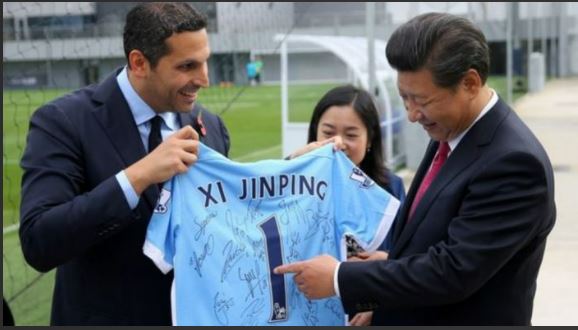
An even bigger absence is China – not through a ban or different preferences but caused by the inability to create a football culture despite lavishing huge amounts on the attempt. Indeed, President Xi Jinping is a football fan and directed an ambitious plan to make China a football powerhouse in 2016.
A 50-point programme followed. “Football has a great social impact and is loved by the great masses. The development and revitalization of football will improve the physical condition of the Chinese people, enrich cultural life, promote the spirit of patriotism and collectivism… The ideas of the second, third and fourth plenary session of the 18th Central Committee should be fully implemented. The speeches by Xi Jinping should serve as a basis for the implementation of reforms.”
A few years later, the Chinese Super League collapsed in a chaotic mess of bad loans and corruption and the aging foreign stars left. It was resuscitated later but China’s national team has gone from bad to worse, currently standing 91st in the international ranking. That is a poor outcome for a superpower with a population of 1.4 billion and a history that suggests that it invented football.
China has created an Olympic medal-winning machine by funnelling children into heavily centralized, routine-based sports like diving, gymnastics and weightlifting. That doesn’t work for football where improvisation and unpredictability are required. The kind of people who excel at football are rarely those who are good at obeying orders.
Central planning by autocratic leaders won’t help. What China badly needs is love, love of the game as exemplified by one remarkable Japanese player.
Kazuyoshi Miura, known to fans as “King Kazu”, started his football career in 1980, an era when the sport was a very minor and totally amateur pastime. Somehow, the fifteen-year-old Miura managed to persuade his parents to let him go to Brazil on his own and learn football in the land of Pele.
He stayed for seven years, working his way up the club system and finally reaching the status of first-team choice for Santos, Pele’s old club. He went on to become a major figure in Japanese football, winning the Asian Player of the Year award, representing his country 89 times and scoring 55 goals in the process.

King Kazu in action
Amazingly, he is still playing today, the oldest professional footballer in the world, at the age of 59. In his book “No, I’m Not Quitting,” he writes: “I think back on a wonderful 90 minutes with joy and satisfaction. I want to carry on like this until I die.”
If China can breed that kind of devotion to the game, it will have successfully spawned a football culture.
What about the US, joint host of the 2026 competition? Its own domestic sports are so lucrative for owners, players and media that there has been little incentive to focus on football. But perhaps things are changing.
Women’s football has already been a huge success in the US, with four world cups and five Olympic golds going to the Americans. Hispanics are the largest minority in the country, and many are familiar with football. The strongest argument, though, is financial. There is enormous money in football these days, and it is hard to believe that Americans will not want a hefty share of the pie.
Meanwhile, the action on the field continues. Can England put an end to the long decades of “hurt” since lifting the trophy in 1966? How many goals for Leo Messi, the best footballer of my lifetime? Mbappé? Vinicius Junior? Can Japan reach the quarterfinals for the first time ever?
All will be revealed in the coming weeks.