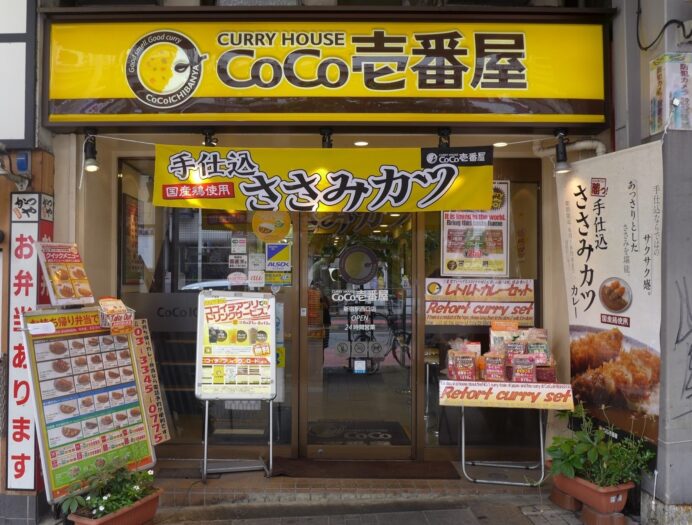
The Economist magazine’s Big Mac index has proved its worth as a guide to real purchasing power, as opposed to the ever-changing numbers in the global currency market. Now a new rival has appeared. Instead of measuring the price of a Big Mac in various countries, Geoff Yu of the Mellon Bank in New York has used the pork-and-rice dish known as katsu curry as his yardstick.
I applaud the innovation. Yu took his data from CoCo Ichibanya, a Japanese restaurant company that operates in many parts of the world. I haven’t eaten at McDonald’s this century, but I often visit Coco Ichibanya as it has an outlet just a few yards from my home in Tokyo.
It stays open very late which is a godsend to me when I’ve neglected to eat dinner for some reason and need quick sustenance.
To be honest, I rarely sample the katsu curry option, preferring the chicken curry with its ten grades of spiciness, ranging from super-mild to tongue scorchingly fiery. Japanese-style kare raisu (curry rice) is a totally different product from the Indian cuisine which is increasingly available in most parts of urban Japan these days. It goes back to the late 19th century when the Japanese military noticed that the British Navy fed its sailors with meals prepared by Indian cooks on board and decided to follow suit.
In modern times, it serves as a cheap and cheerful comfort food, not as calorie laden as katsu curry but nutritious enough to keep you going until the next meal time, unlike, for example, ramen. Naturally it has its own Japanese aesthetic. The plate is divided into exactly two halves. One is the territory of the curry sauce and the other is covered in a layer of pristine white rice, with its intimations of Shinto ceremonies. Do you eat the rice first or do you eat the curry sauce first or do you mix the whole thing up straight away? You can tell quite a lot about a person by the way they eat their curry rice.
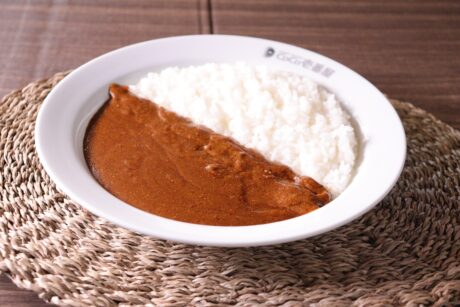
Curry rice as it should be
Coco Ichibanya, with its cute monkey logo, is a familiar brand in Japan. It has over 1,300 outlets domestically and 190 overseas. That bears no comparison with the huge scale of McDonald’s worldwide business but the company is certainly feisty. It has opened two restaurants in India. And of course, it has scored quite a coup via Steven Yu’s Katsu Curry Index.
In fact, the index reveals an interesting result. Most measurements of purchasing power rate the Japanese Yen as outrageously undervalued. For example, the Big Mac Index states that the US dollar is worth only 80 Yen whereas the currency markets say the dollar is worth 160 Yen, twice as much. The OECD numbers are similar.
The Katsu Curry Index goes much further, finding that the dollar is worth just 62 Yen. So if anyone is planning to travel to Japan, the best way of benefiting is to eat as much katsu curry as possible with some curry rice for variety.